Now that I’ve gotten used to being ‘old’…

An elder friend told me years ago, ‘old’ is always ten years older than you are right now! Actually, I still do struggle with the apparent fact that I am now 63 years old. In my mind people in their sixties are like my grandparents. They are retired, checked out of the work world. I barely remember my grandparents before they retired. I mostly remember them as elderly folks who hung out a lot watching TV. This all reminds me of how different and out of it I must seem to kids today.

I’m beginning to think I’m the last person on planet earth who has never owned a “smart” phone and never really needed one.

I still communicate with my friends through e-mail to set up dates, etc. It works and does not add all those additional monthly expenses for mobile phones. I suppose my thrifty nature has made it possible for us to retire early… But then you do run into the whole, “What do you do with your life now?” question.

First of all, anything would be better than my life back in 2004 when I lost my last job. I was driving a hour each way to Denver to work at Regis University Libraries. I swear I’m still suffering from back and shoulder pain from that daily trek down I-25 to a job I hated, with people who apparently hated me. After six years I got fired in a way that felt like the end of life itself, but turned out to be the best thing ever!  Yes, my life since then has been the perfect example of this Chinese parable from 2,000 years ago:

A Chinese farmer gets a beautiful horse, but it soon runs away. A neighbor says, “That’s bad!” The farmer replies, “Good news, bad news, who can say?”

The horse comes back and brings another horse with him. Good news, you might say. 

The farmer gives the second horse to his son, who rides it, but is then thrown and breaks his leg.

“So sorry for your bad news,” says the concerned neighbor. “Good news, bad news, who can say?” the farmer replies.

In a week or so, the emperor’s men come and take every able-bodied young man to fight in a war. The farmer’s son is spared...

Proving once again that nothing is as it seems at the time. From my first (and ONLY!) firing as a professional librarian at age 49, I learned that it’s best not to get too hung up on what happened today. Even something that seems like the worst EVER can turn out to be a hidden opportunity to improve your life!

320 W. 2nd St. Walsenburg

Our Walsenburg rental, an 100-year-old miner’s home!

My best example of this is four years ago when we moved down here to build solar in the foothills. When we first got here I was not certain this was such a great idea. Moving from an up-and-coming city like Fort Collins to a poor, quiet, rundown town like Walsenburg left me thinking,

“Is this a bad thing? Have I lost my mind?”

4052 Comanche Drive September 4th 2021 with sunflowers (3)

But resilience and patience got us through the difficult adjustment stage of building this home out in the foothills west of Walsenburg, and today I am supremely happy to be here now.

Note to myself: Allow LOTS of time for personal adjustment around major life changes.

And yes, we do find excellent ways to spend our days, even in retirement. We have learned to enjoy a much slower pace with lots of time to just be. I have also learned how to truly live in the present.

If you can find a better way to live your life, go for it!

“There’s nothing sweeter than falling in love with the moment we’re given, the only one we have.”  — Marcia Smalley

How did I ever live so long?

I’m 63 today, and it may sound strange, but I never expected to live this long. That’s probably because I remember how old my grandparents seemed in their sixties. My Grandpa Carter died a few months after his retirement at age 65. But if you understand the history and statistics behind this issue, you will see where I’m coming from.

In my research for my book Find Your Reason To Be Here I wrote:

What else is unique about the boomer generation?

In the past one hundred years, we have witnessed the greatest increase in life expectancy and longevity in human history. In 1935, when Social Security became a government program and established the retirement age at 65, the life expectancy for American men was 60 and for women, 64. Those born in the early twentieth century were not expected to live past age 65, and most didn’t. Life expectancy in the United States increased a full 20 years between 1930 and 2010. The average American today who lives to be age 65 is expected to survive well past 80. 

U.S. Life Expectancy at Birth, 1930–2010
Birth Year Both Sexes Male Female
2010 78.7 76.2 81.1
2000 77.0 74.3 79.7
1990 75.4 71.8 78.8
1980 73.7 70.0 77.4
1970 70.8 67.1 74.7
1960 69.7 66.6 73.1
1950 68.2 65.6 71.1
1940 62.9 60.8 65.2
1930 59.7 58.1 61.6
(Source: National Center for Health Statistics, National Vital Statistics Reports, http://www.cdc.gov/nchs)

 It is difficult for most of us to fully comprehend how much the average life span has increased, even just in our own lifetime. It may help to recall how young our grandparents were when they died.

So here I am, wondering in amazement at my accomplishment. With ever improving health information, education and health care I shall go on until who knows when….

 “Life after 50 or 60 is itself another country, as different as adolescence is from childhood, or as adulthood is from adolescence.”  — Gloria Steinem

Happy Birthday to ME

Learning how to live in the present moment

April Buddha

This week I borrowed a unique documentary from my local library, Walk With Me, a contemplative journey which follows the steps of Zen master Thich Nhat Hanh, with rare insights into life within a monastic community. So begins Max Pugh and Marc J. Francis’ fascinating exploration of what it means to devote one’s life to mindfulness.

“With unprecedented access to the famous secluded monastery of Plum Village in the South West of France, Walk With Me captures the daily routine and rituals of monks and nuns on a quest to develop a deep sense of presence. It is an insightful rumination on the pursuit of happiness, living in the present and our attachment to material things – a welcome remedy to the stresses of city life and a world in turmoil.”  — Laure Bonville

What I found most fascinating about this immersion into monastic life is how similar it can be to life outside of cities, where life is luxuriously slow and overflowing with simple joys. The theme is crystal clear:

Be here now. There is no past, there is no future, just this moment…

One of the ways this short film has changed my life is in my desire to be more contemplative in each moment. For example when I first wake up I now love to look out at the birds outside my door. I find them to be the perfect topic for my first meditation of the day.

IMGP7300

Wild animals do not sit around thinking about their past or imagining their future, because if they focused much on that they would not survive for long. We were also once totally focused on the present moment. We had to be. But now we have the luxury of too much time, so we think about way too much stuff!

Luckily the mind can be trained over and over again. Today we can decide to stop all the concern and worry about everything else in the world, and focus on this moment before us, the only one we truly have.

“There is a fire inside. Sit down beside it. Watch the flames, the ancient, flickering dance of yourself.”    —  John MacEnulty

Boomer Spring Stories: The Easter Edition!

EASTER-EGGS small for blogDoesn’t everyone have a great Easter story? I do! Many years ago my Mom and I were visiting her parents in a small town in Missouri. It was a beautiful spring day so we were out walking around. We came to a park and started noticing small candy eggs laying around, so we picked a few up. Ten minutes later the kids arrived, yelling and all worked up. We suddenly got it. We were stealing candy from children! We re-hide them quick…

Easter chocolate Bunny cartoon                                                 It’s also time for my favorite Easter bunny joke!
Easter is my favorite time of year, because I was born around this time… a true Easter baby!

Here’s how the date of Easter is determined:  “Easter falls on the first Sunday following the Paschal Full Moon, the full moon on or after 21 March, taken to be the date of the vernal equinox.”

Let’s see what some of my boomer blog friends have to say about springtime. Here’s one from a friend in Australia first:

Spring adds new life

Spring has arrived in the Northern Hemisphere. Sue Loncaric from Sizzling Towards 60 & Beyond shares her thoughts on welcoming spring and the opportunity of new beginnings and possibilities: Ten things you can do to enjoy spring and also enrich your life with health and happiness.

Spring’s the time to do some life pruning and there’s no time like Easter to begin, says Carol Cassara over at Heart Mind Soul. Releasing what no longer serves us is a great way to celebrate renewal and rebirth.   

daffodilsLonger hours of light, the sun feels slightly warmer every day, the gray landscape begins to turn green, it must be the season when we spring forward. These experiences all inspired Meryl Baer of Six Decades and Counting to write her piece, “And Then There Was Light.”  

Jennifer from Unfold And Begin is happy that the temperatures are warming up in Connecticut.  It means she can come out of hibernation and start enjoying warmer temperatures.  The weather also reminded her of a special drive that she took with her mother once. Read about it in “Driving With My Mother.”

BartendersRebecca Olkowski with BabyBoomster.com has been celebrating Women’s History Month (instead of spring). She attended an event in LA called “The History of Women and the Cocktail.” During the Victorian Age, women were concocting some amazing drinks to enjoy with their friends, even though they were excluded from bars and saloons. Well, I guess I’ll drink to that!

On The Survive and Thrive Boomer Guide, Rita R. Robison, consumer journalist, writes about how going to a new Methodist church with her sister on Palm Sunday this year brought ups memories of Easters past. Robison remembers how much she liked the sunrise services and enjoyed the way the hymns sounded in the hills surrounding Lake Chelan in Washington state.

Tom Sightings admits that he has a lot of nostalgia for the 1990s, when his kids were growing up and things were going well at work. But now in Can We Be Happy for the Rest of Our Lives? he examines how happy we are — and how happy we can be — in this new phase of life we call retirement.

Field of Wild Iris near Stonewall

Me, I’m cruising with gratitude that the sun still comes up everyday and spring always returns right on time. I feel so fortunate every day that I found the love of my life thirteen years ago.

Midlife really did create a kind of rebirth for me and then a whole new spiritual journey!

The Ancient Ones & My Own Spirit Quest

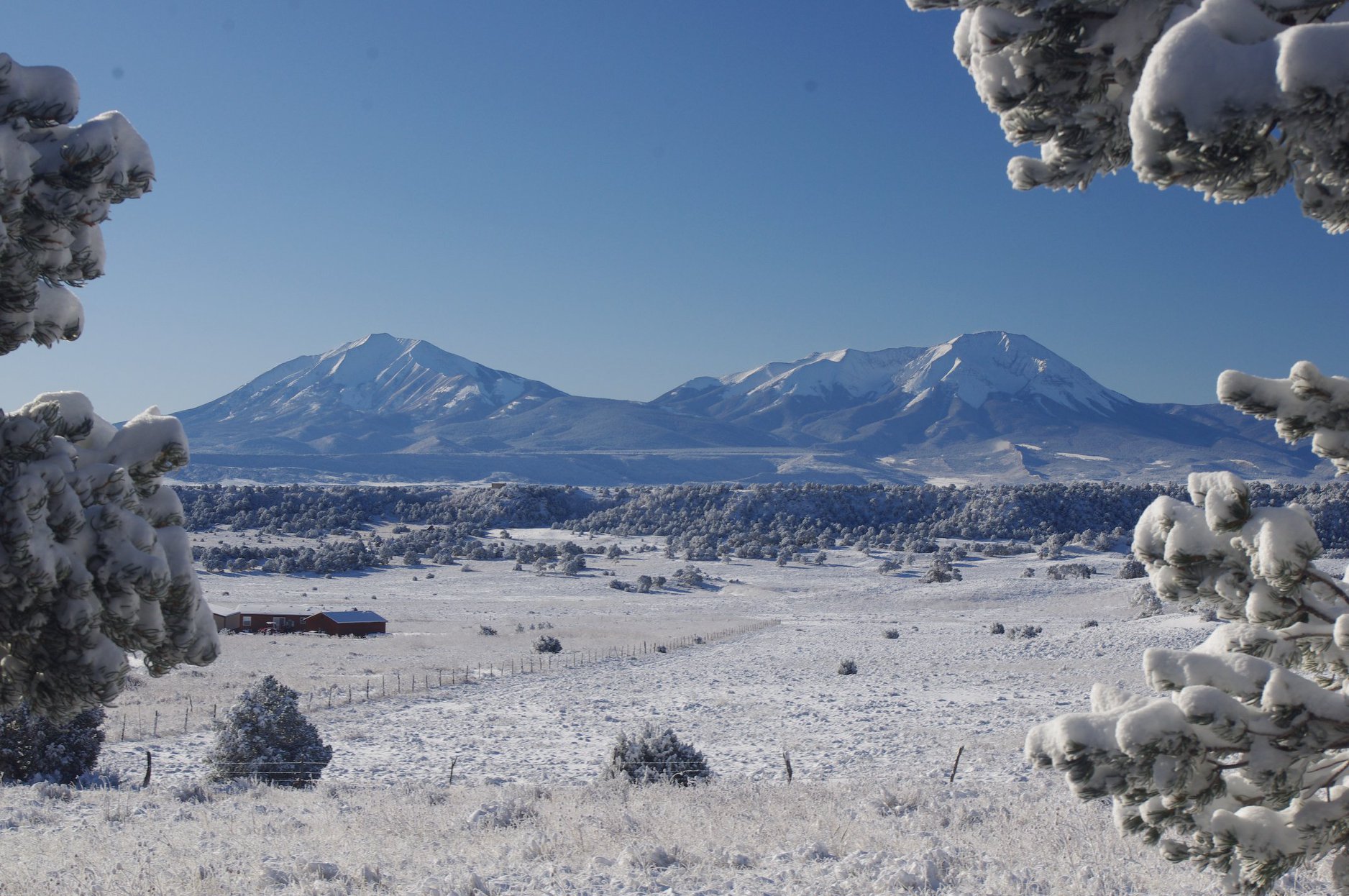
great Mike photo of snow and Spanish Peaks

Since we moved here on our three acres outside of any city or town, my spiritual quest has been to connect more deeply with this land and its history. I know mostly Ute Indians traversed the valley below us regularly to travel out east to Old Bent’s Fort to sell their furs and meet other life-minded nomadic tribes. I sometimes feel their presence.

Last night, when I was having trouble sleeping, I remembered a marvelous spiritual experience I had back when Mike and I were still searching for the perfect place to retire. Here you go:

“Conchas” Living by Laura Lee Carter, April 2008

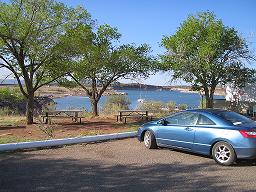
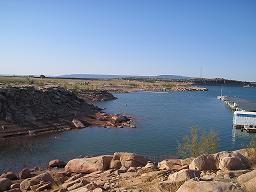
My husband Mike and I are spending our vacations these days, exploring possible destinations to retire to, just in case we can ever afford it. This year we spent a few days on a road trip through northeastern New Mexico.

We were drawn to a series of lakes north of Tucumcari: Ute Lake, Conchas Lake and Santa Rosa Lake. These are all state parks with nice facilities and beautiful but ever shrinking reservoirs as the drought continues down there. Two nights were spent camping at Conchas Lake State Park.

The first night felt like a spiritual awakening to me. Our tent was open at the top so I could see all the stars, and I don’t recall ever experiencing such amazing and overwhelming silence in my entire life. My personal account follows, written in the middle of the night:

In the perfect silence of a star-filled New Mexican night, I lie in my sleeping bag, contemplating the wonders of our universe. Yes, there are still places in America where one can marvel at the brilliant stars above, while getting lost in the silence of the surrounding wilderness.

Did a Native American woman lie in this exact same spot thinking similar thoughts many centuries before me? I feel so connected to the earth.

Living close to the earth increases my awareness of everything: the air temperature, the slightest breeze, the fragrances, the colors of the wildflowers and cacti, the occasional yelp of coyotes in the distance, the soaring hawks and vultures overhead. Time slows down.

The animal sounds serve to remind me that there was a time when we were simply prey to the many predators around us. We weren’t high-minded beings that thought that we had taken possession of the earth, but were instead just a potential meal to a hungry wolf or coyote nearby.

The homophonic nature of the Indian word “Conchas” and our word “conscious” were not lost on us. Mike’s Ojibwa family heritage may have been at play. We came to explore this land and also our own “conscious” minds, to learn about the ancient ones that inhabited this land long before us, to understand on a deeper level, the history of our earth.

Those that study the earth say that the present drought is probably another eleven year cycle, and the rains will return. But we must all wonder if man has impacted the earth’s natural cycles so gravely that they may be forever changed. We shall see.

After Conchas Lake, we headed northwest to the Jemez Pueblo area. I rarely use the word “awesome”, but I can’t imagine a better description of the deep red canyons of the Jemez Mountains. They are a unique and wonderful vision to behold!