Dealing with Trauma as a Highly Sensitive Person with Head Injuries: A Personal Note

I have been thinking about trauma in my own history these past few weeks and I now see I have suffered a number of traumatic experiences that I did not originally recognize as such. I think this can be attributed to two personal factors. One is that I have always been a “highly sensitive person” and the second is my numerous head injuries in the past 15 years.

I assume most of you have heard of the term highly sensitive, but these are the traits I relate to personally:

  • Overly sensitive to emotional and physical violence
  • Naturally experiencing the emotions of those around me
  • Often feel overstimulated
  • Often need to withdraw because of overstimulation
  • Startle very easily
  • Enjoy a rich inner life
  • Feel deeply moved by beauty
  • Deeply emotional and compassionate
  • Unable to deal with even moderate amounts of criticism
  • Usually feel different and alone
  • Easily overthink and worry way too much
  • Very intuitive
  • Often feel tired and emotionally overwhelmed

I guess you can see why someone like me can be more easily traumatized. Then when I experienced a traumatic brain injury in 2008, my ability to deal with others, especially when they are angry or even just mean to me was multiplied by one hundred percent. And with this most recent serious concussion I find I am so easily drained after simple exchanges with others, and I can only socialize for an hour or two with anyone.

Luckily I found a life partner who is also quite sensitive and therefore understands exactly how much I can take from others. And yet, even with him I need to withdraw regularly into my quiet little world where nobody can reach me. I simply feel safest alone in very quiet places. I guess I am a true introvert now.
Understanding the power of trauma in your life

I found myself wondering recently why a traumatic breakup with a lover over forty years ago still has such a powerful impact on my brain, so I did some research on recent findings on how psychological trauma can affect us. I was especially interested in how we can get “stuck” emotionally when traumatized.

I have always found it fascinating how one traumatic event can change everything. Ever since I did my counseling psychology internship in a rehab hospital back in the 1990s, trauma has been one my favorite areas of research.

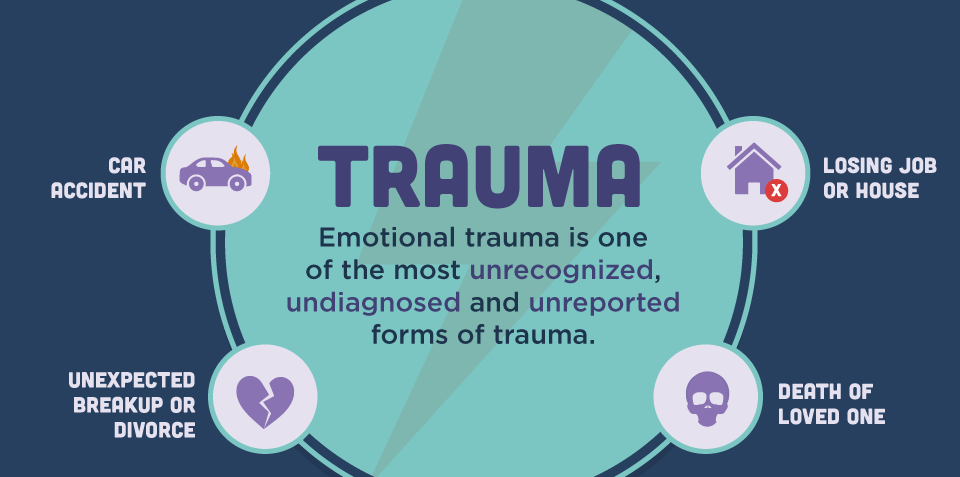
There are a number of important misunderstandings about human trauma. The first is that a “trauma” has to be something tragic, violent or catastrophic, like being injured in combat, a natural disaster or terrible accident. This is simply not true. Our brains are all very different and may interpret any incident in our lives as traumatic, even if the event does not register as highly significant at the time.

Our psychological backgrounds and emotional sensitivity levels are so unique that a traumatic breakup or an abusive relationship can cause one person to regress or get stuck emotionally, while that same event might have little impact on someone living through a similar experience.

Trauma is not an event that happens to you, it’s how you process that event. If you are emotionally injured as a child or young adult, the outcomes can be greater than as an adult. If you receive support or help while going through a traumatic event and its aftermath, the trauma is less likely to have such long term effects. But if you experience the trauma alone and with no support, the effects can be much more long-term and traumatic, especially if that event feels like it threatens your very existence.

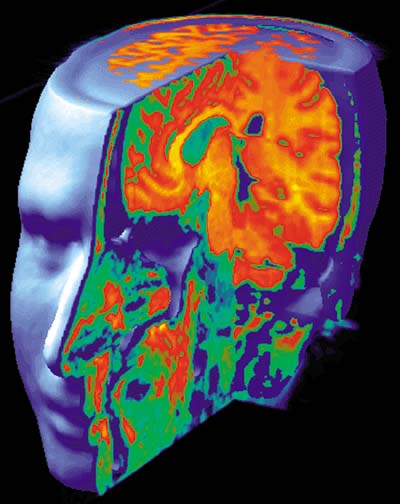
Depending on the severity of the trauma, your entire way of being may be formed around one traumatic event. This is because, on a neurobiological level, the trauma is not properly processed. It can rewire your brain in such a way that ultimately influences your thought patterns and behavioral responses as you get older.

Traumatic events can overwhelm you body and mind, leaving a lasting mark on your mood, relationships, and sense of self long after the trauma has ended. When trauma impairs your ability to develop full emotional maturity, this is known as arrested psychological development. Trauma can freeze your emotional response at the age that you experienced it. When we are traumatized at an early age, the memory of the trauma is stored both in our brain and body. As a result, if healing does not occur, the traumatic incident can impede healthy development.

The good news is that if we understand how traumatic this event has been in our lives and then seek proper help from a licensed therapist, most can integrate their traumatic experiences and become unstuck emotionally. For many this will mean developing more mature emotional responses and relying less on unhelpful, child-like coping methods.

Take it from me. Spending the time to fully process anything you consider traumatic in your past, can only benefit your emotional future!

Brain injuries and a misdiagnosis of apathy

One of the results of my recent psychological and memory testing was a diagnosis of apathy. I thought about that for a few days and then spoke to a friend I’ve known for almost twenty years about my supposed problem.

His response? “No, you are absolutely not apathetic!”

So what is apathy? According to Oxford, “lack of interest, enthusiasm, or concern.”

Signs and Symptoms of Apathy:

Lacking the effort or energy to do everyday things. Dependence on others to plan activities.

No desire to learn new things, meet new people, or have new experiences.

Lack of care about your own problems. Tendency to feel no emotions when good or bad things happen.

After further thought I realized that this type of testing mistook “apathy” for a natural sadness and frustration when someone with a great brain experiences multiple assaults on their brain health. I would challenge anyone to experience what I have in the past fifteen years, and not feel sad and frustrated.

The most reassuring book I have read about brain injury is: “My Stroke of Insight: A Brain Scientist’s Personal Journey” by Jill Bolte Taylor, Ph.D. There I learned how slow the brain recovers from injury, but it certainly can rebuild itself eventually! My first brain injury, a TBI in 2008, taught me that. The most important thing to remember is that your brain will tell you when it’s tired and you really MUST STOP when it tells you that. For me now, an hour or two of any type of total concentration exhausts my brain. So when I took a two hour focused memory test I failed and came across as suffering from apathy, when in fact I felt total brain-exhaustion halfway through and after it was over I slept for over twelve hours straight.

I find myself excited and enthusiastic about many things like plants, gardening, photography, writing, old movies, music, new foods and learning something new everyday. I have just learned to pace myself to give my trusty brain plenty of space to recover with endless hours of restful sleep. Few understand my specific needs these days like I do. My brain will simply shut down if I don’t respect its messages to me. I certainly expected a brain specialist to understand that!

Unfortunately, it seems I must continue to educate “the experts” what brain injuries are all about. Perhaps they don’t know, but one of the best benefits of brain injury is the full realization that we MUST make the most of every single day we’re alive!

“Do we really need much more than this? To honor the dawn. To visit a garden. To talk to a friend. To contemplate a cloud. To cherish a meal. To bow our heads before the mystery of the day. Are these not enough?” — Kent Nerburn

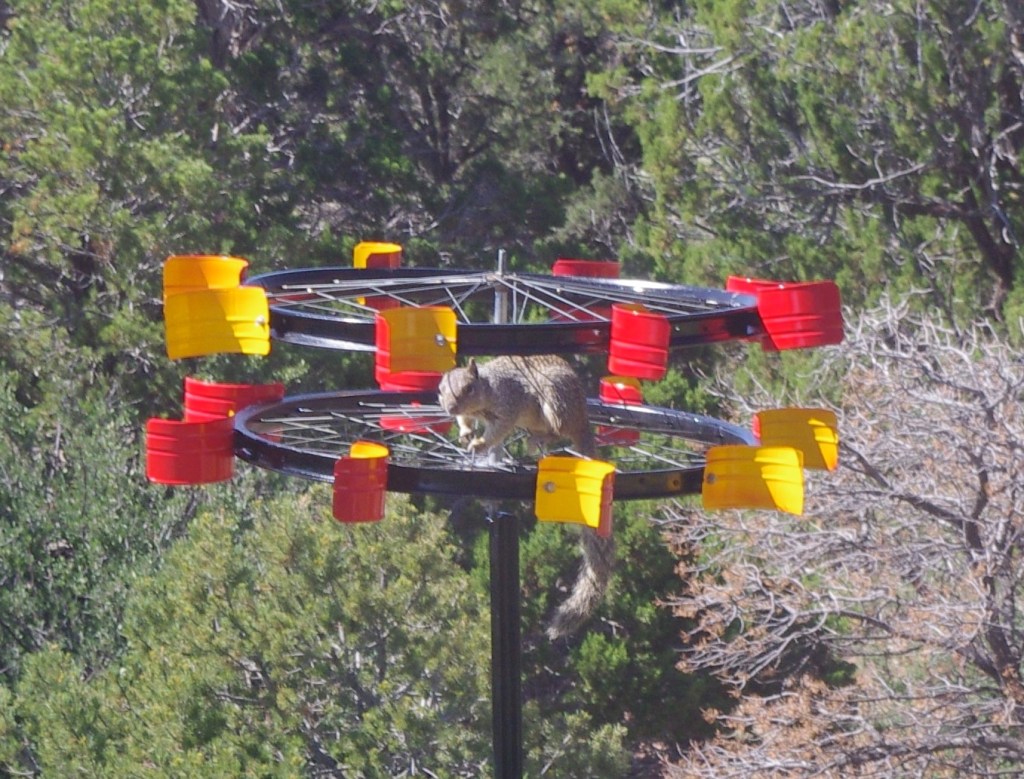
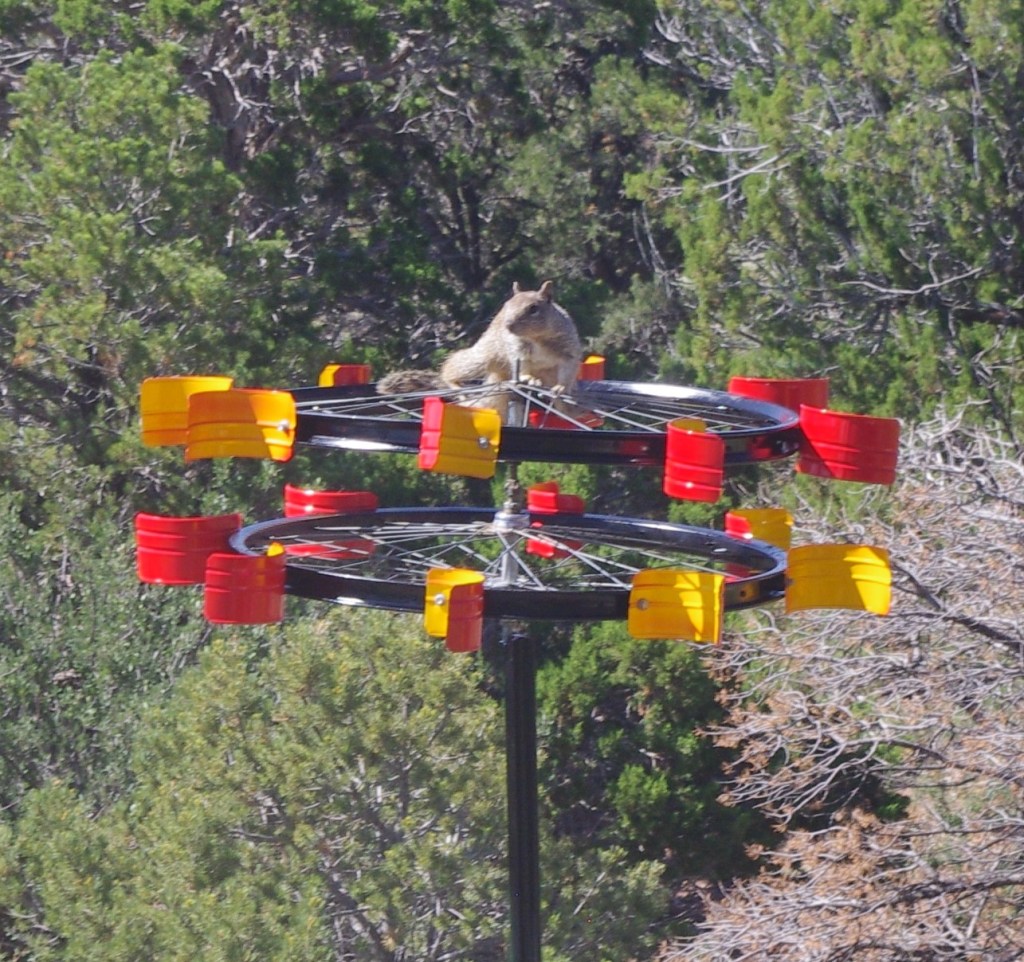
Our Circus Squirrel Performs!

The latest from our backyard garden melodrama. A squirrel just climbed up and started riding around on the new wind whirley-gigs that Mike re-painted this past week…

First she climbed this one but I didn’t have my camera ready…

Then she went up this one and started to enjoy the ride!

Next, it was up to the upper level….

For a quick run around upstairs!

Maybe she went up there for a better view.

Then she turned around, took a bow and waved byebye!

Happy to be home!

After just two days up in the northern Colorado cities, Mike and I are always so happy to come home! Speaking as someone with a brain injury, cities increase my stress level immediately, even as we drive north through Pueblo, Colorado Springs and Denver. In summary, being there exhausts my brain energy so quickly. There is also the stress of staying in a different house with different people. All I know is that I need to sleep a lot after I get home to “catch up” on my mental comfort level and health. Of course, psychologists have known for years that:

“City living can chip away at your psychological immune system, which can be precarious for those with a family history of mental illness. According to psychologists , this environmental stress can increase their risk of developing a psychiatric condition, such as anxiety, depression, or bipolar disorder.”

As we drive south out of the metro parts of Colorado, we both breathe a gigantic sigh of relief. We love to return to the life that we love in one of the least populated and developed counties in Colorado. We find slow, quiet, and peaceful is great for our sanity! Our passive solar home always stays cool for free while we’re gone. I miss my garden and Mike misses his cat Rosie when we go on trips.

This is our reward for moving down here eight years ago now… Try to beat that view from your back porch! When I first met Mike he said he wasn’t moving again unless it was to somewhere where he wasn’t looking at the house across the street. Success at last!

I immediately go outside and check on my plants. Luckily nobody got eaten while we were gone 🙂

And yes, I do have some native plants coming up too, like this yucca, a transplanted Cholla cactus and some evening primrose. I sure hope the Cholla decides to bloom this July! It’s flowers are a bright magenta color.

Postscript: The funniest thing I witnessed on our drive through Denver was a trucking company named: “Follow me to Jesus, Inc.” No shit!

Garden Snow Art – May 22, 2022

OK, so I am not thrilled to find a foot of snow on my just-beginning-to-bloom garden this morning…

…but I do get a kick out of photographing the results of the snow, and besides, WE REALLY DO NEED THE MOISTURE!

Yucca makes a fine pincushion pattern in our sculpture garden!

And there is a little beauty to be found in the midst of a May blizzard. Besides we got over an inch of precipitation! Sure hope those baby blue bird chicks in our birdhouse survived…