How lonely are you?

According to recent research, Americans are a pretty lonely group, and the younger you are, the lonelier you feel.

nationwide survey by the health insurer Cigna underscores that fact. Their survey of over 20,000 American adults age 18 or older, finds that loneliness is widespread in our country, with nearly 50 percent of respondents reporting that they feel left out always or sometimes.

The Cigna results offer some alarming findings:

  • Nearly half of Americans report sometimes or always feeling alone (46 percent) or left out (47 percent).

  • One in four Americans (27 percent) rarely or never feel as though there are people who really understand them.

  • Two in five Americans sometimes or always feel that their relationships are not meaningful (43 percent) and that they are isolated from others (43 percent).

  • One in five people report they rarely or never feel close to people or feel like there are people they can talk to.

  • Americans who live with others are less likely to be lonely (average loneliness score of 43.5) compared to those who live alone (46.4). However, this does not apply to single parents/guardians (average loneliness score of 48.2) – even though they live with children, they are more likely to be lonely.

  • Only around half of Americans (53 percent) have regular meaningful in-person social interactions, such as having an extended conversation with a friend or spending quality time with family.

  • Generation Z (adults ages 18-22) is the loneliest generation and claims to be in worse health than older generations.

Is social media part of the problem?

Social media use alone is not a predictor of loneliness; respondents defined as very heavy users of social media have a loneliness score (43.5) not markedly different from the score of those who never use social media (41.7).

More time online and social media may be causing a rise in depression and suicide among American adolescents. People who spend less time looking at screens and more time having face-to-face social interactions are less likely to be depressive or suicidal.

It appears that how people use social media determines its influence on one’s sense of isolation.

Members of Generation Z, born between the mid-1990s and the early 2000s, had an overall loneliness score of 48.3. Millennials, just a little bit older, scored 45.3. By comparison, baby boomers scored 42.4. The Greatest Generation, people ages 72 and above, had a score of 38.6 on the loneliness scale.

I have been what I consider to be a loner for most of my life, and enjoyed most of that time alone. Even though I moved here with Mike, I feared moving to rural Colorado because I didn’t know if I would find friends here. As it turns out, I do have a few friends who understand the value of a great education, deep friendship and healthy solitude.

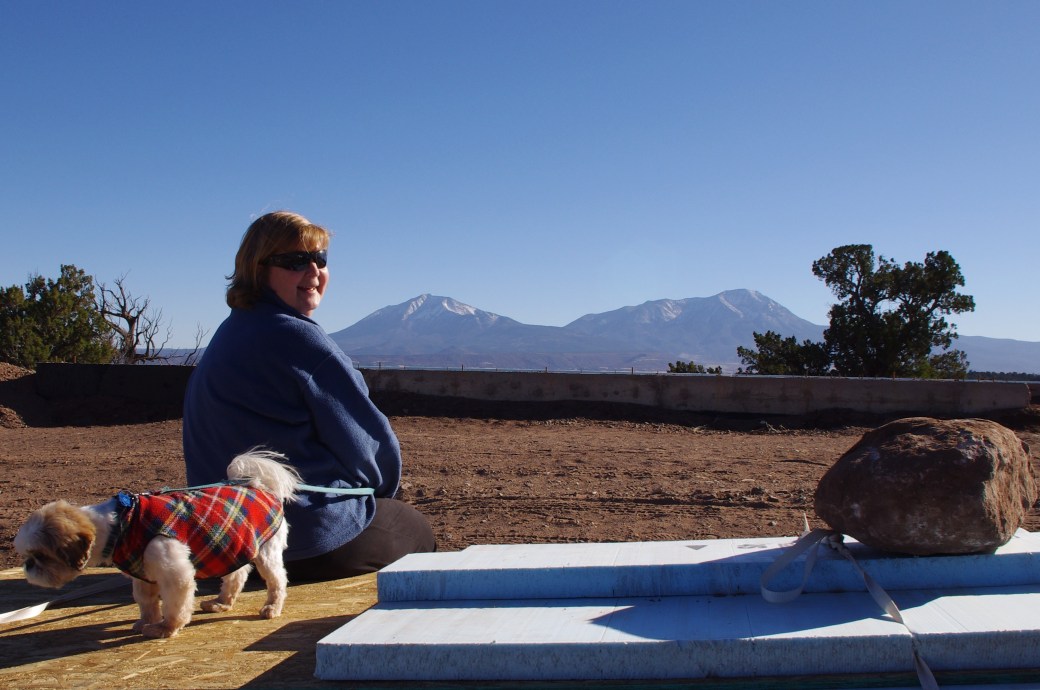
Laura and Rasta on insulation 2014 (2)

I also find I enjoy spending more time alone when feeling so connected to nature as I do here.

A Study of Vigilance in Rural Colorado

Vigilance: the action or state of keeping careful watch for possible danger or difficulties. Synonyms: alertness, attentiveness, watchfulness

As a psychologist, my natural tendency is to observe changes in my own and others’ behavior. By living in cities for most of my life, and then moving outside of even the smallest town recently, I have had a marvelous opportunity to observe how my consciousness has changed. One area I find particularly interesting is my level of vigilance.

This is a state which most are not conscious of, because it can often be barely felt on a conscious level. Simple thoughts like “Are my doors locked?” “Do I feel safe now?” and “Am I safe?” can come up constantly. I became much more aware of these feelings after moving away from cities. In this way I discovered that we all experience varying degrees of safety in any environment.

I see now that while living in cities I felt the need to be constantly vigilant. Especially living as a single woman there, I was always quite aware of locking my doors, noticing strange sounds or things going on around my home, etc. Cities offer such a tight concentration of people everywhere, with traffic, lines at the store, etc. They seem to require a heightened level of vigilance at all times.

Sunflowers on a county road

MY COMMUTE TO TOWN

However, I didn’t become aware of my city-inspired heighten state of vigilance until I tried living away from others. When I first moved out into the country I felt isolated and concerned about that sense of isolation. How would I make new friends? What about emergencies?

But in less than a year or so those fears turned into a new sense of security and safety. We live among others who have three to six acres of land, and most keep completely to themselves. In this new setting I found that I needed to train myself how to mellow out. I was still hyper-vigilant, a trait that no longer served me.

Each year I live here, my level of deep security and relaxation increases along with my level of introversion. Some might see this as a bad thing, but I must say it feels really good to feel truly safe for the first time in decades, both in my home and in my life.

Should a seeker not find a companion who is better or equal, let him resolutely pursue a solitary path. There is no companionship with a fool.  – The Dhammapada


Earth Day in the USA: Love Your Mother

earth day

On January 28, 1969, a well drilled by Union Oil Platform A off the coast of Santa Barbara, California, blew out. More than three million gallons of oil spewed, killing over 10,000 seabirds, dolphins, seals, and sea lions. As a reaction to this natural disaster, activists were mobilized to create environmental regulation, environmental education, and Earth Day. Among the proponents of Earth Day were the people in the front lines of fighting this disaster, Selma Rubin, Marc McGinnes, and Bud Bottoms, founder of Get Oil Out.

Earth Day 1970

The first Earth Day celebrations took place in 1970 at two thousand colleges and universities, roughly ten thousand primary and secondary schools, and hundreds of communities across the United States. It also brought 20 million Americans out into the spring sunshine for peaceful demonstrations in favor of environmental reform. It now is observed in 192 countries, and coordinated by the nonprofit Earth Day Network, chaired by the first Earth Day 1970 organizer Denis Hayes, according to whom Earth Day is now “the largest secular holiday in the world, celebrated by more than a billion people every year.” Environmental groups seek to make Earth Day into a day of action to change human behavior and provoke policy changes.

Why Earth Day Today?

Because the earth needs us now more than ever! And since we’re fresh out of other planets to live on, now is as good a time as ever to do everything we can to preserve the miracle of this green and blue planet. Go solar! Use wind power. Change old habits that hurt the earth. You could probably name ten things today that would benefit Mother Earth immediately. Do it instead of just thinking about it!

big earth

What does the future hold? It’s all up to us!


Now that I’ve gotten used to being ‘old’…

An elder friend told me years ago, ‘old’ is always ten years older than you are right now! Actually, I still do struggle with the apparent fact that I am now 63 years old. In my mind people in their sixties are like my grandparents. They are retired, checked out of the work world. I barely remember my grandparents before they retired. I mostly remember them as elderly folks who hung out a lot watching TV. This all reminds me of how different and out of it I must seem to kids today.

I’m beginning to think I’m the last person on planet earth who has never owned a “smart” phone and never really needed one.

I still communicate with my friends through e-mail to set up dates, etc. It works and does not add all those additional monthly expenses for mobile phones. I suppose my thrifty nature has made it possible for us to retire early… But then you do run into the whole, “What do you do with your life now?” question.

First of all, anything would be better than my life back in 2004 when I lost my last job. I was driving a hour each way to Denver to work at Regis University Libraries. I swear I’m still suffering from back and shoulder pain from that daily trek down I-25 to a job I hated, with people who apparently hated me. After six years I got fired in a way that felt like the end of life itself, but turned out to be the best thing ever!  Yes, my life since then has been the perfect example of this Chinese parable from 2,000 years ago:

A Chinese farmer gets a beautiful horse, but it soon runs away. A neighbor says, “That’s bad!” The farmer replies, “Good news, bad news, who can say?”

The horse comes back and brings another horse with him. Good news, you might say. 

The farmer gives the second horse to his son, who rides it, but is then thrown and breaks his leg.

“So sorry for your bad news,” says the concerned neighbor. “Good news, bad news, who can say?” the farmer replies.

In a week or so, the emperor’s men come and take every able-bodied young man to fight in a war. The farmer’s son is spared...

Proving once again that nothing is as it seems at the time. From my first (and ONLY!) firing as a professional librarian at age 49, I learned that it’s best not to get too hung up on what happened today. Even something that seems like the worst EVER can turn out to be a hidden opportunity to improve your life!

320 W. 2nd St. Walsenburg

Our Walsenburg rental, an 100-year-old miner’s home!

My best example of this is four years ago when we moved down here to build solar in the foothills. When we first got here I was not certain this was such a great idea. Moving from an up-and-coming city like Fort Collins to a poor, quiet, rundown town like Walsenburg left me thinking,

“Is this a bad thing? Have I lost my mind?”

4052 Comanche Drive September 4th 2021 with sunflowers (3)

But resilience and patience got us through the difficult adjustment stage of building this home out in the foothills west of Walsenburg, and today I am supremely happy to be here now.

Note to myself: Allow LOTS of time for personal adjustment around major life changes.

And yes, we do find excellent ways to spend our days, even in retirement. We have learned to enjoy a much slower pace with lots of time to just be. I have also learned how to truly live in the present.

If you can find a better way to live your life, go for it!

“There’s nothing sweeter than falling in love with the moment we’re given, the only one we have.”  — Marcia Smalley
Learning how to live in the present moment

April Buddha

This week I borrowed a unique documentary from my local library, Walk With Me, a contemplative journey which follows the steps of Zen master Thich Nhat Hanh, with rare insights into life within a monastic community. So begins Max Pugh and Marc J. Francis’ fascinating exploration of what it means to devote one’s life to mindfulness.

“With unprecedented access to the famous secluded monastery of Plum Village in the South West of France, Walk With Me captures the daily routine and rituals of monks and nuns on a quest to develop a deep sense of presence. It is an insightful rumination on the pursuit of happiness, living in the present and our attachment to material things – a welcome remedy to the stresses of city life and a world in turmoil.”  — Laure Bonville

What I found most fascinating about this immersion into monastic life is how similar it can be to life outside of cities, where life is luxuriously slow and overflowing with simple joys. The theme is crystal clear:

Be here now. There is no past, there is no future, just this moment…

One of the ways this short film has changed my life is in my desire to be more contemplative in each moment. For example when I first wake up I now love to look out at the birds outside my door. I find them to be the perfect topic for my first meditation of the day.

IMGP7300

Wild animals do not sit around thinking about their past or imagining their future, because if they focused much on that they would not survive for long. We were also once totally focused on the present moment. We had to be. But now we have the luxury of too much time, so we think about way too much stuff!

Luckily the mind can be trained over and over again. Today we can decide to stop all the concern and worry about everything else in the world, and focus on this moment before us, the only one we truly have.

“There is a fire inside. Sit down beside it. Watch the flames, the ancient, flickering dance of yourself.”    —  John MacEnulty

The Ancient Ones & My Own Spirit Quest

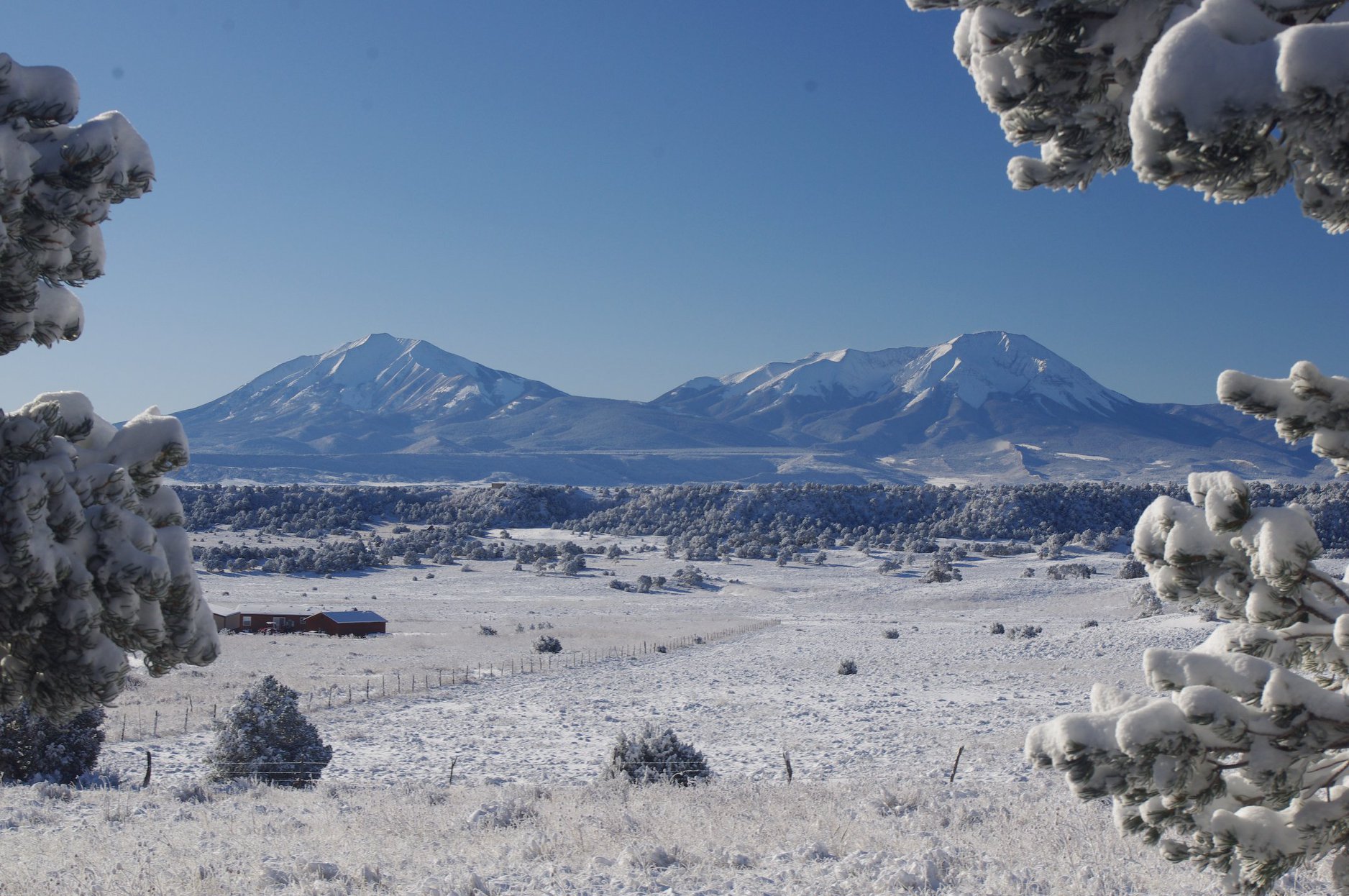
great Mike photo of snow and Spanish Peaks

Since we moved here on our three acres outside of any city or town, my spiritual quest has been to connect more deeply with this land and its history. I know mostly Ute Indians traversed the valley below us regularly to travel out east to Old Bent’s Fort to sell their furs and meet other life-minded nomadic tribes. I sometimes feel their presence.

Last night, when I was having trouble sleeping, I remembered a marvelous spiritual experience I had back when Mike and I were still searching for the perfect place to retire. Here you go:

“Conchas” Living by Laura Lee Carter, April 2008

My husband Mike and I are spending our vacations these days, exploring possible destinations to retire to, just in case we can ever afford it. This year we spent a few days on a road trip through northeastern New Mexico.

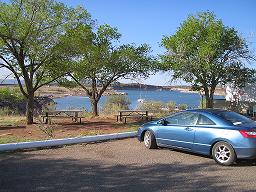
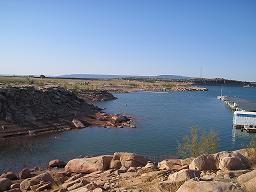
We were drawn to a series of lakes north of Tucumcari: Ute Lake, Conchas Lake and Santa Rosa Lake. These are all state parks with nice facilities and beautiful but ever shrinking reservoirs as the drought continues down there. Two nights were spent camping at Conchas Lake State Park.

The first night felt like a spiritual awakening to me. Our tent was open at the top so I could see all the stars, and I don’t recall ever experiencing such amazing and overwhelming silence in my entire life. My personal account follows, written in the middle of the night:

In the perfect silence of a star-filled New Mexican night, I lie in my sleeping bag, contemplating the wonders of our universe. Yes, there are still places in America where one can marvel at the brilliant stars above, while getting lost in the silence of the surrounding wilderness.

Did a Native American woman lie in this exact same spot thinking similar thoughts many centuries before me? I feel so connected to the earth.

Living close to the earth increases my awareness of everything: the air temperature, the slightest breeze, the fragrances, the colors of the wildflowers and cacti, the occasional yelp of coyotes in the distance, the soaring hawks and vultures overhead. Time slows down.

The animal sounds serve to remind me that there was a time when we were simply prey to the many predators around us. We weren’t high-minded beings that thought that we had taken possession of the earth, but were instead just a potential meal to a hungry wolf or coyote nearby.

The homophonic nature of the Indian word “Conchas” and our word “conscious” were not lost on us. Mike’s Ojibwa family heritage may have been at play. We came to explore this land and also our own “conscious” minds, to learn about the ancient ones that inhabited this land long before us, to understand on a deeper level, the history of our earth.

Those that study the earth say that the present drought is probably another eleven year cycle, and the rains will return. But we must all wonder if man has impacted the earth’s natural cycles so gravely that they may be forever changed. We shall see.

After Conchas Lake, we headed northwest to the Jemez Pueblo area. I rarely use the word “awesome”, but I can’t imagine a better description of the deep red canyons of the Jemez Mountains. They are a unique and wonderful vision to behold!