Will new AI programs replace the art of writing?

OpenAI’s artificial intelligence writing program ChatGPT can compose poetry, prose, song lyrics, essays, even news articles. That has ethicists and educators worried about the program’s ease at replacing human ideas with chatbot-generated words. I can already hear the concerns of educators. What about the process of writing your first term paper? Isn’t that an important part of learning?

In the history of our species there have been a number of reasons to create writing so we could record history. The first hieroglyphics were used by Egyptian priests to record important events like wars or stories about their gods and Pharaohs. These were also used to decorate temples and tombs. Writing has been used to communicate with future generations, entertain others as art (poetry, plays, prose, stories), for history and business. For most of these purposes an AI program would have sufficed to communicate. Most of us may not need to learn how to write a poem, an essay or a term paper if we have no interest and we will never need that skill again. The skill we all need and seems to be sorely lacking in our world today is critical thinking.

For most, writing a term paper may be a useless exercise, but for some of us, writing is a lifeline to sanity. I have made a practice of keeping journals my entire life. This practice of self-analysis has always helped me think through what I am experiencing and process the reasoning behind my choices, my way of delving into something I want to know more about within myself.
Now, after a few serious brain injuries, writing is my lifeline to my former self; how I connect the two worlds, the person I used to be and who I am today. My fine mind has served me well, but now it is exhausting and confusing for me to sit down at my computer and put ideas and feelings together in writing, and yet I believe this is an essential exercise in me still being me. No AI program can do this for me, and it is so worth the effort.

The process of creating is vital to the human brain. Films, music, books, poems, works of art can all be programmed into AI today, but should they be? What about the lived experience of each of us? What about the emotions of living a life?

Writing was created for a purpose, and it has served humanity in so many ways. I feel certain that will continue.

Cognitive Impairment & Dementia Past Age 60

I’ve been busy lately learning more about “mild cognitive impairment” (MCI) and dementia for myself, my mom and my brother. I was diagnosed in August with MCI by taking a two hour test from a Licensed Clinical Psychologist. This means that compared to others my age, I show some signs of cognitive impairment in a few different areas, mostly in short-term memory. These findings did not surprise me a bit considering my long history with TBI and concussions. In fact I wondered why I bothered with the tests afterwards, because they were so exhausting!

Then a few weeks ago my brother John started complaining of terrible brain fog. He could barely function some days, but it usually became less difficult as the day went on. He ended up sleeping a lot because he couldn’t do much else. I got so worried about him that I called our local hospice people. They were kind enough to come over and speak to John this week. They said he was doing OK and not ready for hospice assistance.

I saw an article in Science Daily recently that says:

“In the first nationally representative study of cognitive impairment prevalence in more than 20 years, Columbia University researchers have found almost 10% of U.S. adults ages 65 and older have dementia, while another 22% have mild cognitive impairment.” in the article:

“One in 10 older Americans has dementia” in Science News, October 24, 2022

Apparently John and I are not alone. In fact I have learned:

“Americans born between 1948 and 1965 are more likely than the generations that preceded them to have multiple health problems as they age. Many develop two or more health conditions up to 20 years sooner than folks from other generations…” according to the article “Cohort Trends in the Burden of Multiple Chronic Conditions Among Aging U.S. Adults” in the June 2022 issue of The Journals of Gerontology

Basically just about everyone in my direct family is dealing with some version of memory loss or MCI, and I am including my 14 year old dog Rasta. None of us are in great shape at the moment. We survive by reminding each other of appointments, etc. My Mom refused memory testing, but her ability to remember has been fading quickly since my Dad died in 2020.

One thing I did learn from my psychologist is that there is now a saliva test to detect the presence of the genetic APOE4 variant, which is associated with increased risk of late-onset (age >60-65) Alzheimer’s disease. 

Here’s a link: https://www.alzheimersorganization.org/product-page/apoe-genetic-test

Of course the next question is, do I really want to know?

Dealing with Trauma as a Highly Sensitive Person with Head Injuries: A Personal Note

I have been thinking about trauma in my own history these past few weeks and I now see I have suffered a number of traumatic experiences that I did not originally recognize as such. I think this can be attributed to two personal factors. One is that I have always been a “highly sensitive person” and the second is my numerous head injuries in the past 15 years.

I assume most of you have heard of the term highly sensitive, but these are the traits I relate to personally:

  • Overly sensitive to emotional and physical violence
  • Naturally experiencing the emotions of those around me
  • Often feel overstimulated
  • Often need to withdraw because of overstimulation
  • Startle very easily
  • Enjoy a rich inner life
  • Feel deeply moved by beauty
  • Deeply emotional and compassionate
  • Unable to deal with even moderate amounts of criticism
  • Usually feel different and alone
  • Easily overthink and worry way too much
  • Very intuitive
  • Often feel tired and emotionally overwhelmed

I guess you can see why someone like me can be more easily traumatized. Then when I experienced a traumatic brain injury in 2008, my ability to deal with others, especially when they are angry or even just mean to me was multiplied by one hundred percent. And with this most recent serious concussion I find I am so easily drained after simple exchanges with others, and I can only socialize for an hour or two with anyone.

Luckily I found a life partner who is also quite sensitive and therefore understands exactly how much I can take from others. And yet, even with him I need to withdraw regularly into my quiet little world where nobody can reach me. I simply feel safest alone in very quiet places. I guess I am a true introvert now.

The most important healing tip I’ve learned from my own brain injuries (TBI & concussions)

I just saw an interesting piece on the importance of sleep on the NBC morning news show, which reminded me of the most important thing I have learned from experiencing a traumatic brain injury and a few serious concussions. That is the amazing healing powers of sleep!

I’ve always been a pretty good sleeper and enjoyed every minute of it, but now I see that sleep, whenever you feel like you need it, is your best brain restoring behavior. When we are younger we may try to get away with less sleep than we need, but, as we age, deep REM sleep is essential to brain health and memory retention.

After my traumatic brain injury fourteen years ago, I had no choice but to sleep quite a bit for months afterwards. I also had fractured ribs and breathing problems. That kept my activities to a minimum. But my brain did slowly heal itself over a few years. It literally re-wired itself to work well again.

It was only after a recent serious concussion in April 2021 that I knew that I must take it really easy on my brain and rest whenever I felt fatigued. Then I read Dr. Jill Bolte Taylor’s amazing book “My Stroke of Insight: A Brain Scientistʼs Personal Journey” where she explained how she slowly healed from a terrible stroke. There she re-emphasized the need to sleep as soon as you feel any need for it. In this way I have slowly regained clarity and stability over the past year and a half.

We must all stop fighting sleep and ENJOY IT! It has such a healing effect on your brain and every other part of your body. If you don’t believe me, believe the Dalai Lama:

Acceptance releases everything to be what it already is… Bye-bye Bodie :(

Did I ever mention how stubborn I am? Most who have known me well would certainly agree!

Most recently it took me a very long time to accept that I really did need to be on oxygen 24 hours per day. And there’s those annoying concussions I have suffered in the past few years mostly because I refused to wear my oxygen, or simply forgot I didn’t have it on. So here I am lost-in-space too much of the time… It isn’t as bad as it sounds, because I now accept all of it.

Bodie, our problem child…

But I had to be convinced that Mike and I could not handle a new puppy at this late date. And it wasn’t just us, our other pets, Rasta at age 14 and Rosie, Mike’s cat, completely rebelled at the experience of one wild and crazy puppy dominating everything while running around our home non-stop.

Mike was just going along with me when I suggested this new addition to our family, because he loves to make me happy. He is the most loving and tolerant person I have ever met, but after five days of pee and poop everywhere and absolutely no peace in our home, we both knew the puppy needed to go back to his pack in Raton. We were so lucky that Bodie’s original owner was also caring and tolerant. She just wanted everyone to be happy too. She already had five dogs, so what the heck! We all saw that this pup needs a household full of kids and/or other dogs who LOVE TO PLAY… FULLTIME!!!

I have always been fairly impulsive, and apparently my brain injuries have made that worse. I guess this lesson falls squarely under the heading of “Live and Learn.” My old dog Rasta took a full day to believe that a puppy wasn’t going to pounce on him at any moment, and our cat has finally emerged from the bedroom. We love having our peace and quiet back.

All’s well that ends well… and now we know.

How to give yourself credit for the life you’ve lived… is it simply luck, or something better?

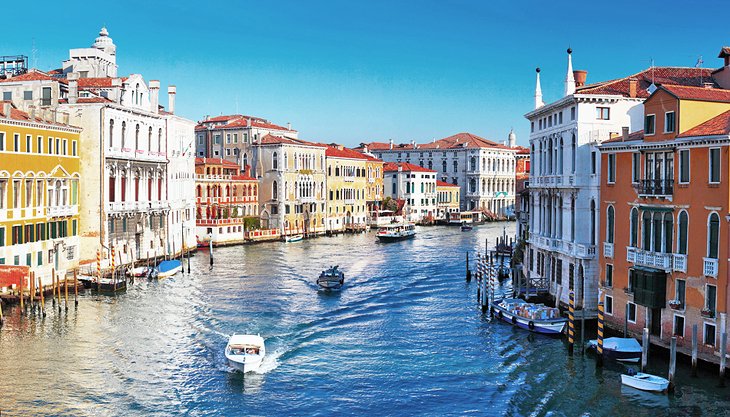
Yesterday we were watching a Youtube video of a boating tour around Venice. Visiting Venice in the mid-1980s was one of my most favorite trips ever. It felt like a trip back in time for me and I loved it! As I watched I kept saying, “I was so lucky to go all of the places I’ve been in my life!” Then I questioned that statement. Was it just luck? Not at all.

When I was young I got the travel bug from my Dad, so whenever I decided to go somewhere, I just did it. I would spend money I didn’t have to go live in Bangkok, float down a number of rivers all over the West, or go sailing in the Caribbean. A friend and I took what we called “the people’s ferry” up the Pearl River to Guilin, China before anyone else was going there. None of these were planned tours, we just went.

This was not a simple case of luck, but rather a perfect example of my belief that ‘what you focus on grows.’ It was my natural inclination to see as much of the world as I could. Luck had little to do with it. Of course the tough part was the bronchitis I had in Bangkok, China, Taipei and Venice, and my difficulties breathing at 8,300 feet in Cuenca, Ecuador. Health scares drove me to visit as many places as I could before my lungs became a problem, making me ever more thankful that I traveled so much when I was young.

Another example of apparent luck? Having such loving beings around me as I find myself not so healthy or able to travel easily. Now I see that was not luck at all. I am one of those people who doesn’t have many friends, but those I have are completely loyal. They know me and love me unconditionally, through thick and thin.

Believing it was just luck that I now live in such a naturally quiet and beautiful place with an amazing garden is pure foolishness. Getting here took quite a bit of time, stress and energy, but it was all completely worth it!

Through this thought process I realized how easy it can be to simply feel lucky, but I think it is important that we give ourselves full credit for the choices we’ve made consciously throughout our lives.

Perhaps we have been better at life than we thought! Imagine that!