retirement
Proper care of an injured or ill friend

 I am now busy copying my favorite posts from my old blog called “Midlife Crisis Queen” as I have decided to close it down soon. I guess my midlife crisis is safely behind me now… I wrote this post a week or so after my bike accident in 2008, where I suffered a traumatic brain injury, fractured ribs, etc. Good advice to those of you who care for those with any bad injuries.
Having recently gone through the harrowing experience of a serious bike accident and its aftermath, I thought you might all benefit from some top do’s and don’ts when someone you love is injured or becomes seriously ill.
-
Do something. Say something. Don’t do or say nothing! BTW, an e-mail is nothing.
-
Do encourage your friend’s strength, spirit and efforts as they try to recover. Don’t minimize their efforts by saying trite things like: “A positive attitude is everything.”
-
Do help your friend communicate with others if they request it. In my case I was not able to communicate with my friends how disabled I was for a few weeks.
-
Do allow your friend to set the mood and limits around them. If they need to talk, go with that. Don’t impose your mood or fears upon them. Respect their limits in the amount of time they can handle spending with others.
-
Do bring cards, food, flowers, videos, etc. to cheer the person up, assist them, and make them feel loved and appreciated.
-
Do include your friend in events or activities they might be able to enjoy. It can get mighty lonely and discouraging spending days on end alone and aching.
-
Do acknowledge their physical changes or disabilities; don’t just ignore them or talk around them.
-
Do offer specific help. Don’t wait for the injured person to ask. If they have experienced a serious injury or concussion, it may not even occur to them to ask. Call them and visit when necessary to offer assistance.
-
Do ask sincerely and specifically about what they have gone through, and allow them to talk about their experience quietly. Listening may be your best skill at this point in time. Severe illness and injury is traumatic, and should be processed emotionally as needed. There are aspects of PTSD related to most serious accidents. Be open to helping your friend recover memories of the experience that they may have forgotten, process bad dreams surrounding their experience, etc.
 It seems that many of us boomers may have lost the fine art of empathy and compassion necessary to care for friends who are ill or injured. This will not serve us, as we age and start to need to depend more heavily on our friends and loved ones for assistance.
Retired and missing your job?
Just heard on the news that most people don’t like their work. OK, perhaps that is no news flash for most, but as a retired person, I find that a bit sad. I immediately flash on a sign my Dad always had up in his office:
“I like my work, but it breaks up the day!”
I was raised by a man who LOVED his work. Silly me, as a kid I thought everybody did. Obviously work gave my Dad meaning and purpose. He was a botany professor who got to interact with college kids all day long. He loved teaching and counseling them. He was one of the few who reached his goal in life, and found it completely satisfying.

Our view of the Sangre de Cristo range every morning!
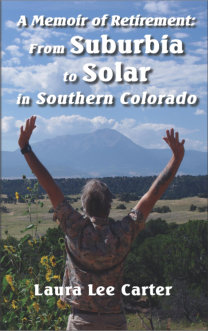
 I’m a newcomer to rural southern Colorado. After two years I decided to compile a short journal about the ups and downs of moving from a good-sized city to rural America to build a passive solar home in the foothills:
  Adventures of the NEW??? Old Farts