Getting off the grid

Today the plumbing, next week the SLAB!
Do any of you have experience in the excruciatingly slow process of building a new home in rural settings? I’m a new viewer to HGTV, and when they complain there about 6 weeks to remodel I think, try waiting 5 months to produce a slab!
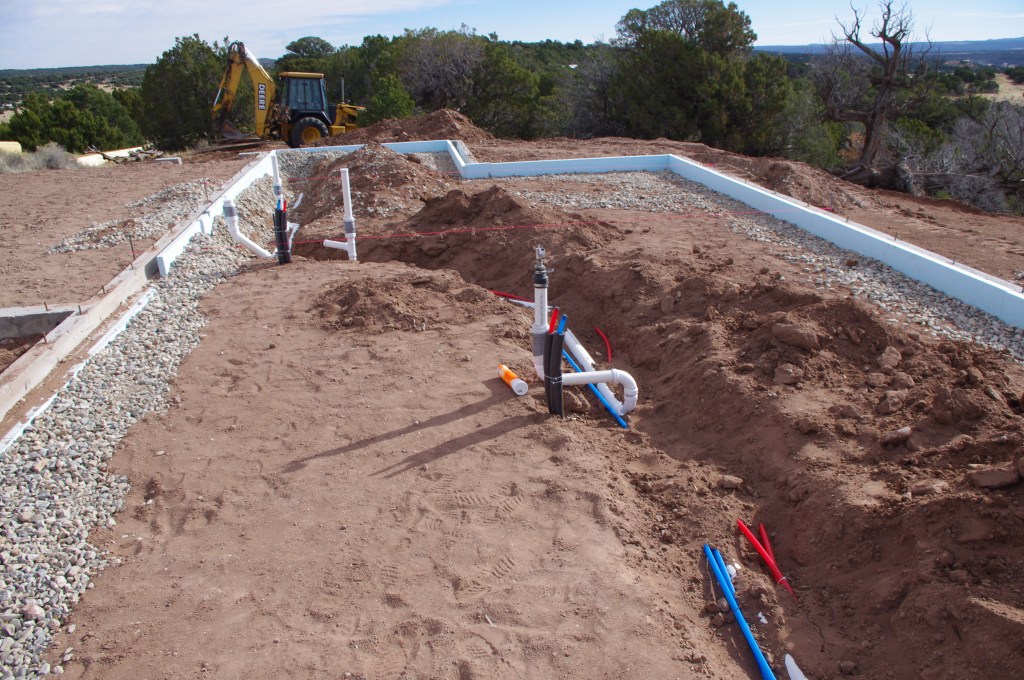 Because we are building a slab on grade foundation, all plumbing had to be built under our slab… and inspected twenty times! But now, we can finally see one big slab in our future!
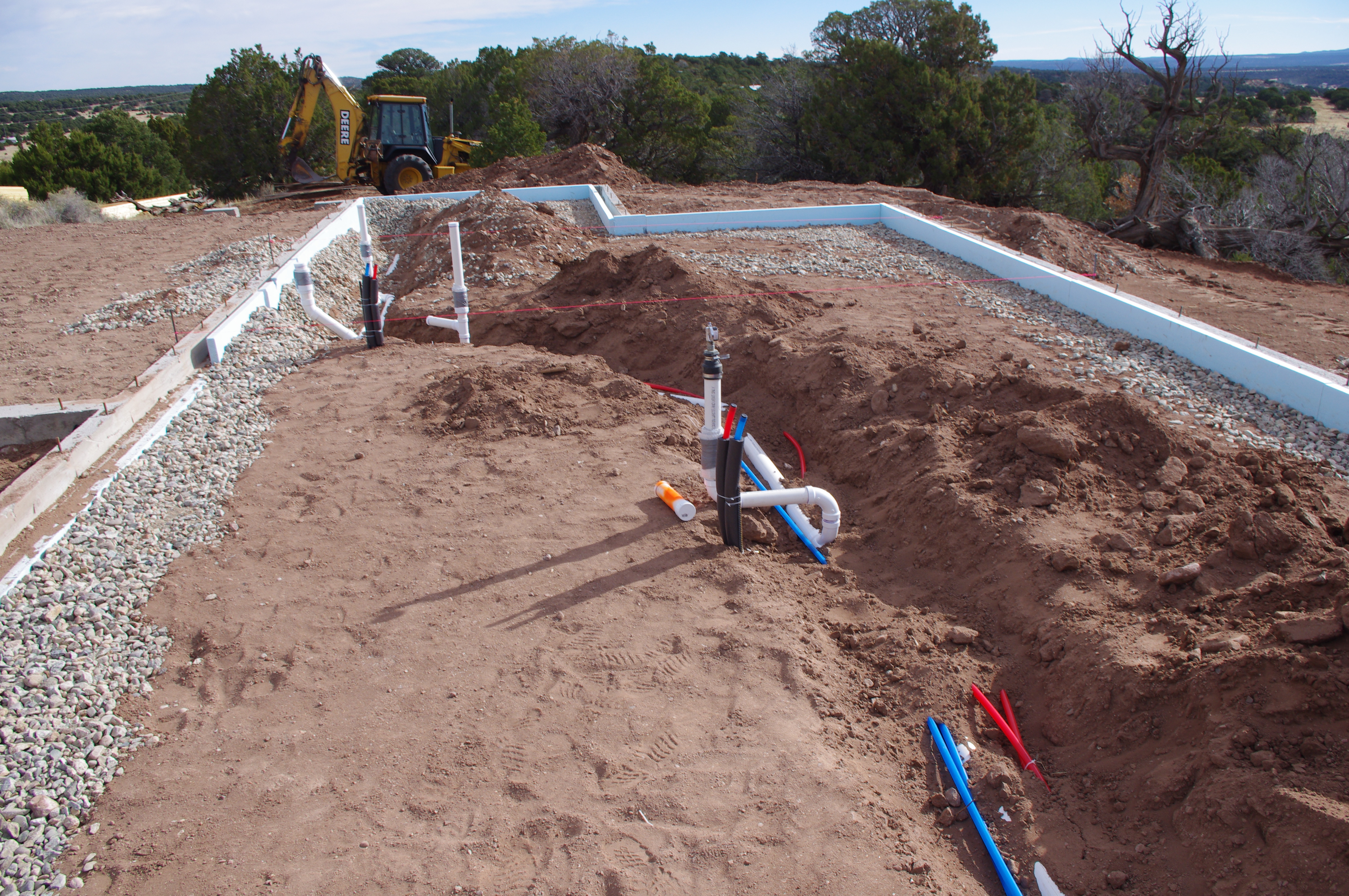
I never thought I would be planning a slab celebration, but we already have the champagne on hand… we’re even thinking about a slab photo for our holiday cards!
See, once the slab is completed, we can start the actual building of walls. In other words, the house will finally begin to take shape. It’s completely crazy how much time this process takes, but our contractor/builder tells us that this is as good as it gets if you want to hire the best workers out here in rural Colorado.
 And we do want the BEST…
How passive solar foundations are different
I bet you were wondering when my husband Mike was going to contribute to this effort. Here is his explanation of how changes in the floor and foundation in our new home in southern Colorado will help to maintain a warm, even temperature in the winter:
 Our new house will be passive solar with a direct gain system. This means that in winter, the sun will shine in through our south-facing windows, directly heating our well-insulated concrete floors.

The concrete floors will be 6 inches thick and covered with ceramic tile. The tile will be a dark color to absorb the heat from the sun.
 While 4 inches is the optimum thickness for the concrete, additional thickness will add some extra heat storage capacity. We thickened our floor to 6 inches to accommodate a few thermal storage water tubes. You can put colored water in them and they look GREAT, but they can be quite heavy. Please see blue examples at right… more about these later!
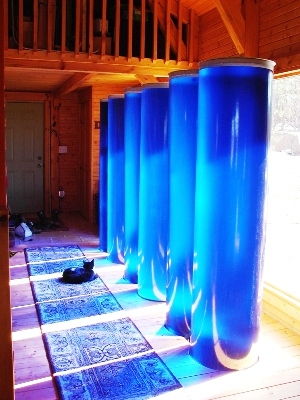
The concrete floor is where the light from the sun is converted to heat and is absorbed into the concrete. The floor moderates the house temperature by its mass, which gives off heat when the house air temperature is low and absorbs heat when the house air temperature is high.
The concrete floor will be insulated from the ground with foam insulation, seen in blue in this photo. It is insulated underneath and around the edges. In addition to this, the foundation walls will be insulated on the inside. This creates a longer path for the heat to escape the house, making the ground under the floor warmer, thus cutting down on heat loss into the earth.
Figuring out where you belong
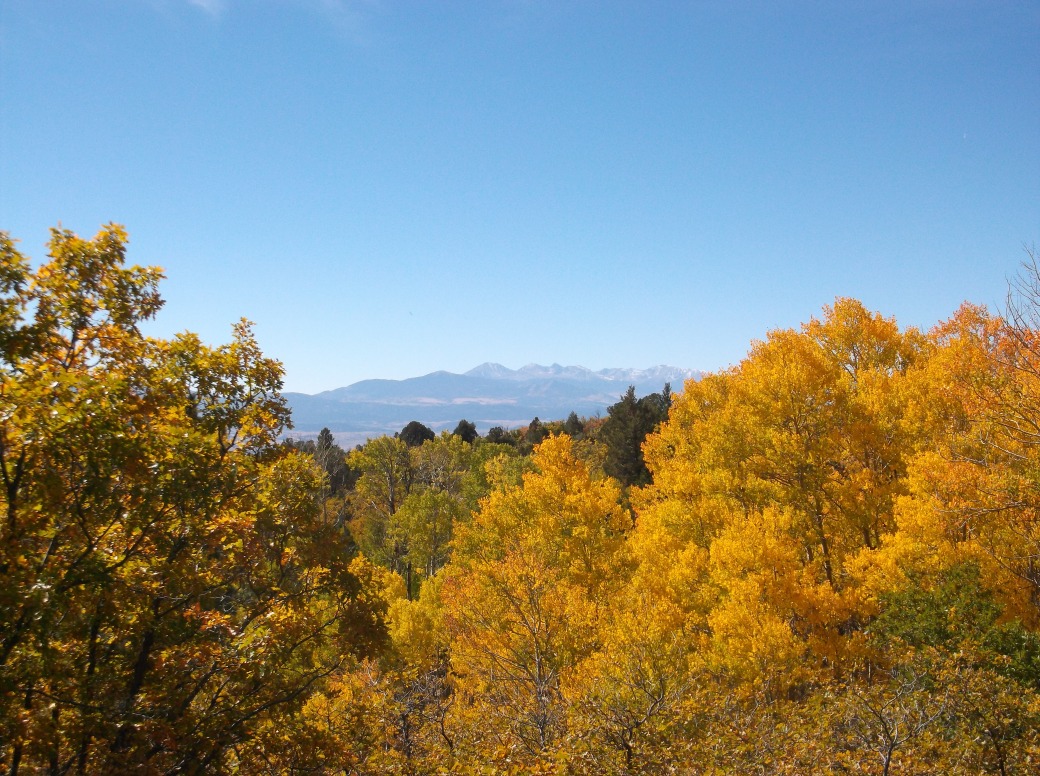 Just took a quick trip out to our building site west of town… Every time I do, I feel even more certain that this is the place in this big, wonderful world that I belong!

I know we all have our own opinions of the most beautiful places in the world. Some can’t live without the ocean, others love the plains, but I am perfectly sure that this semi-arid piece of land close to the high mountains suits me just fine.
It’s hard to say what it is that makes me so certain. The absolute silence is very important to me, especially after listening to the relentless traffic noise in Fort Collins for nine years. The natural beauty and wide variety of birds, plants and wildlife also help… This is simply my place.
This setting makes me feel like I never want to leave. I feel gratitude that we can finally live our dream in our very own place in the sun… solar-powered, of course!
I’m a newcomer to rural southern Colorado. After two years I decided to compile a short journal about the ups and downs of moving from a good-sized city to rural America to build a passive solar retirement home in the foothills:
A Memoir of Retirement: From Suburbia to Solar in Southern Colorado
Please share this information with your friends if they are considering similar life changes. Feel free to contact me directly to discuss any of these challenges, and to order your own signed copies of any of my books! Cheers, Laura Lee (email me: MidlifeCrisisQueen@gmail.com)
Delays and Over-Budget Items!
As you all must know, construction is not for the weak of heart or stomach! I’m new to this game. I have never been involved in a major construction project, especially in a rural area. So far I am reminded of that famous movie quote from Betty Davis:
“Fasten your seat belts… It’s going to be a bumpy ride!”
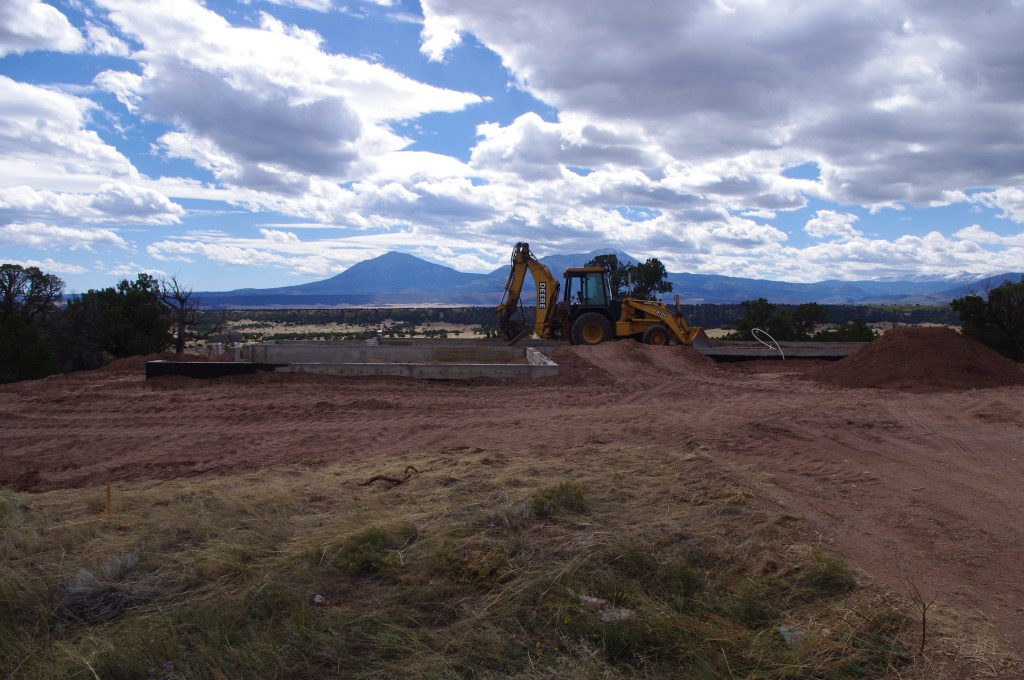 Once we had our blue prints together with full engineer approval, we had a month and a half delay just to procure our building permit!
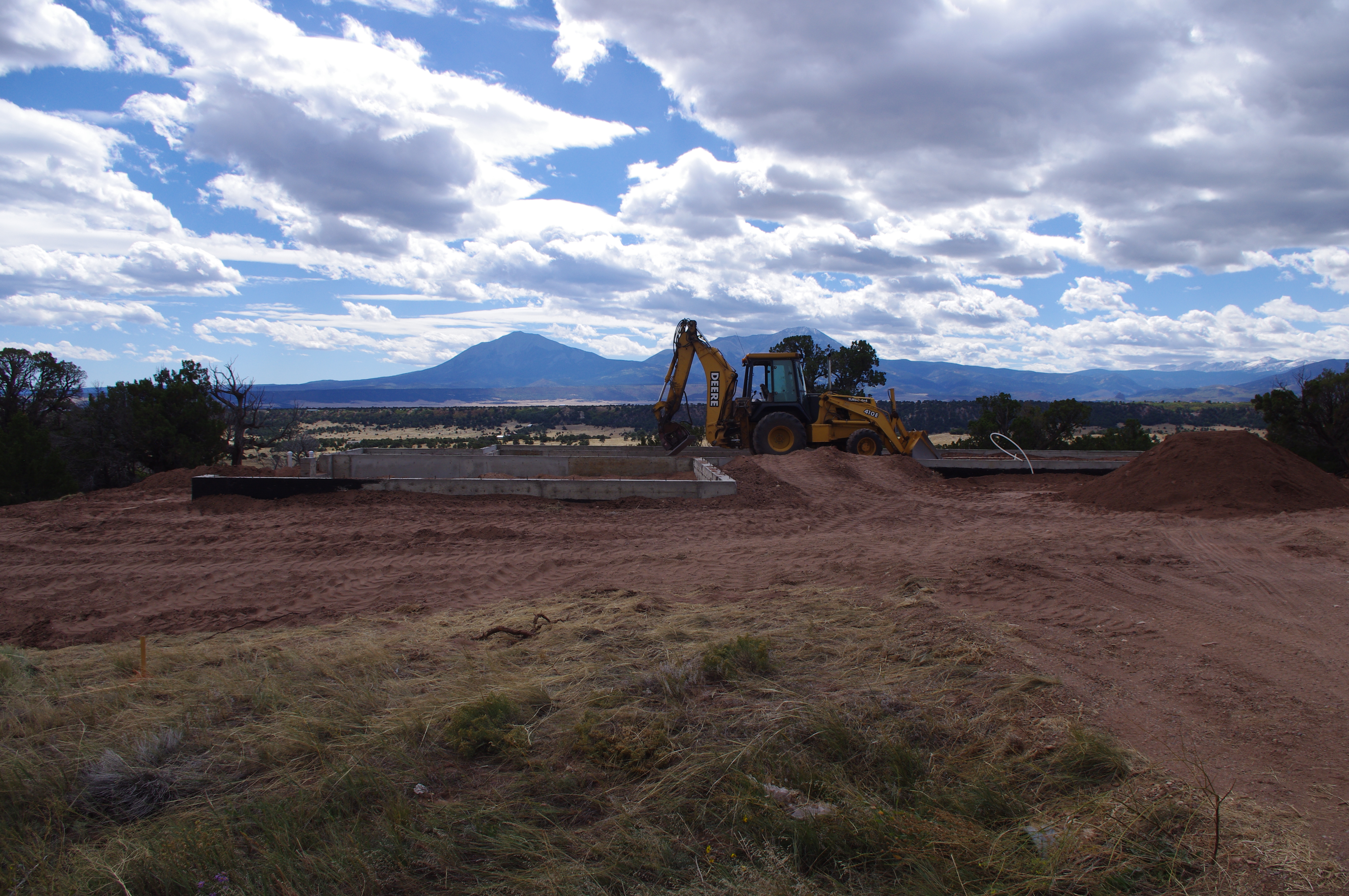
This was because the ONLY INSPECTOR IN THIS ENTIRE COUNTY had ten building projects ahead of ours. Yes, this county is getting more popular, probably because of the amazing natural beauty in combination with quite reasonable land prices.
Then we got some bad news about road set-backs on our property, leading to the need to spend $10,000 extra on backfill materials. We chalked that up to no use building a home on a less than solid foundation!
Then it seemed like we were making some great progress… for a while. We got the footers in quickly and then the foundation. The plumbing was going in and the slab looked imminent.
That was until Mike realized the builder has forgotten about the foundation insulation. This is essential in a passive solar home. The heat that gets absorbed into the slab floor must be retained by insulation under the slab and at the foundation walls.
That meant another week delay to get the insulation here. Now we’re waiting to get the excavator back up there to install it and finish the slab so the actual home construction can begin.
 In the meantime we have been living in a 1,000 square foot rental in Walsenburg built in 1911. For the past four months we have been waiting to get this show on the road! With half of our stuff in storage, we are constantly saying, “Yeah we have one of those. We just don’t know where it is!”
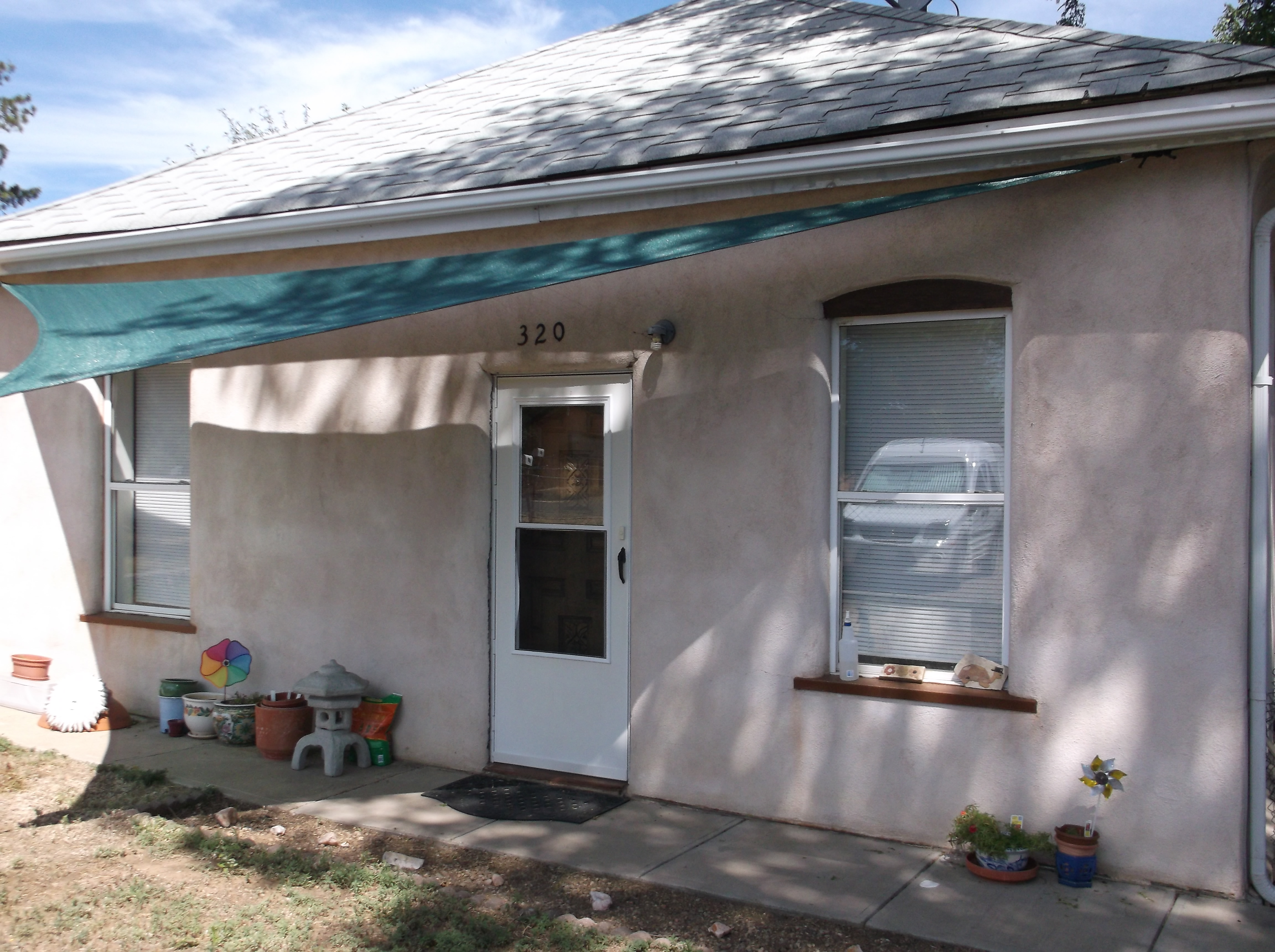
We are so anxious to get out on our land and I can assure you, I am NOT a patient person! Luckily Mike is a master at calming me down when I go off the deep end…
Our solar home is FINALLY taking shape!
For those who are new here, my husband Mike and I sold our perfectly good suburban home in Fort Collins Colorado four months ago, to move 225 miles south and build the home we have always dreamed of.
When I first met Mike at age 49 in early 2005, we fell in love quite quickly. He told me then that he wasn’t moving again unless he got a great view, and could design and build a passive solar home outside the city. Nine years later that dream is coming true!
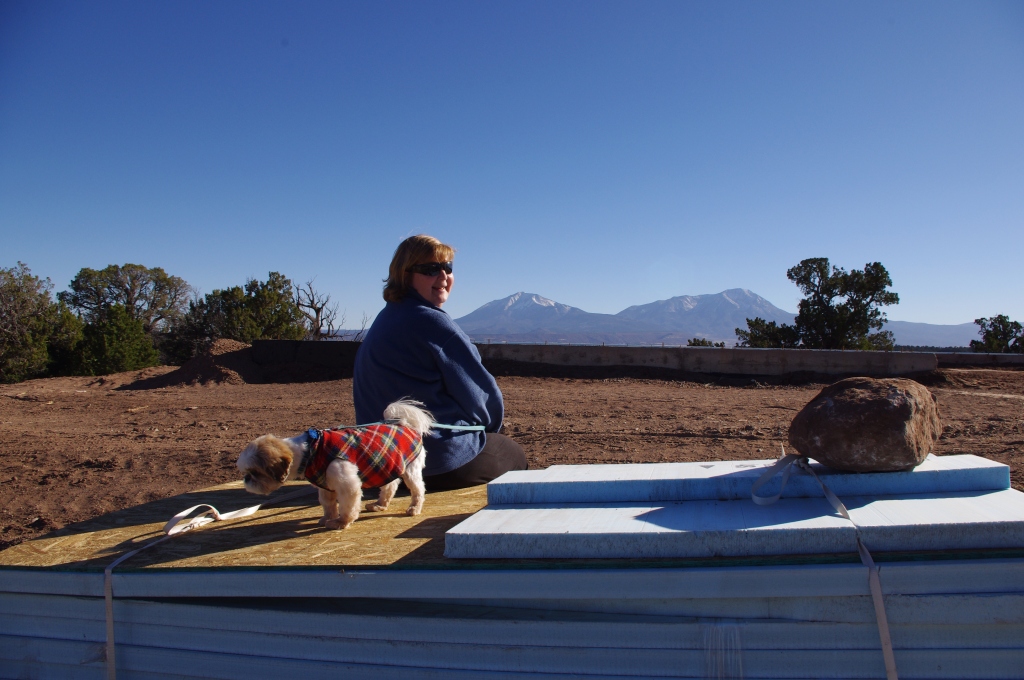
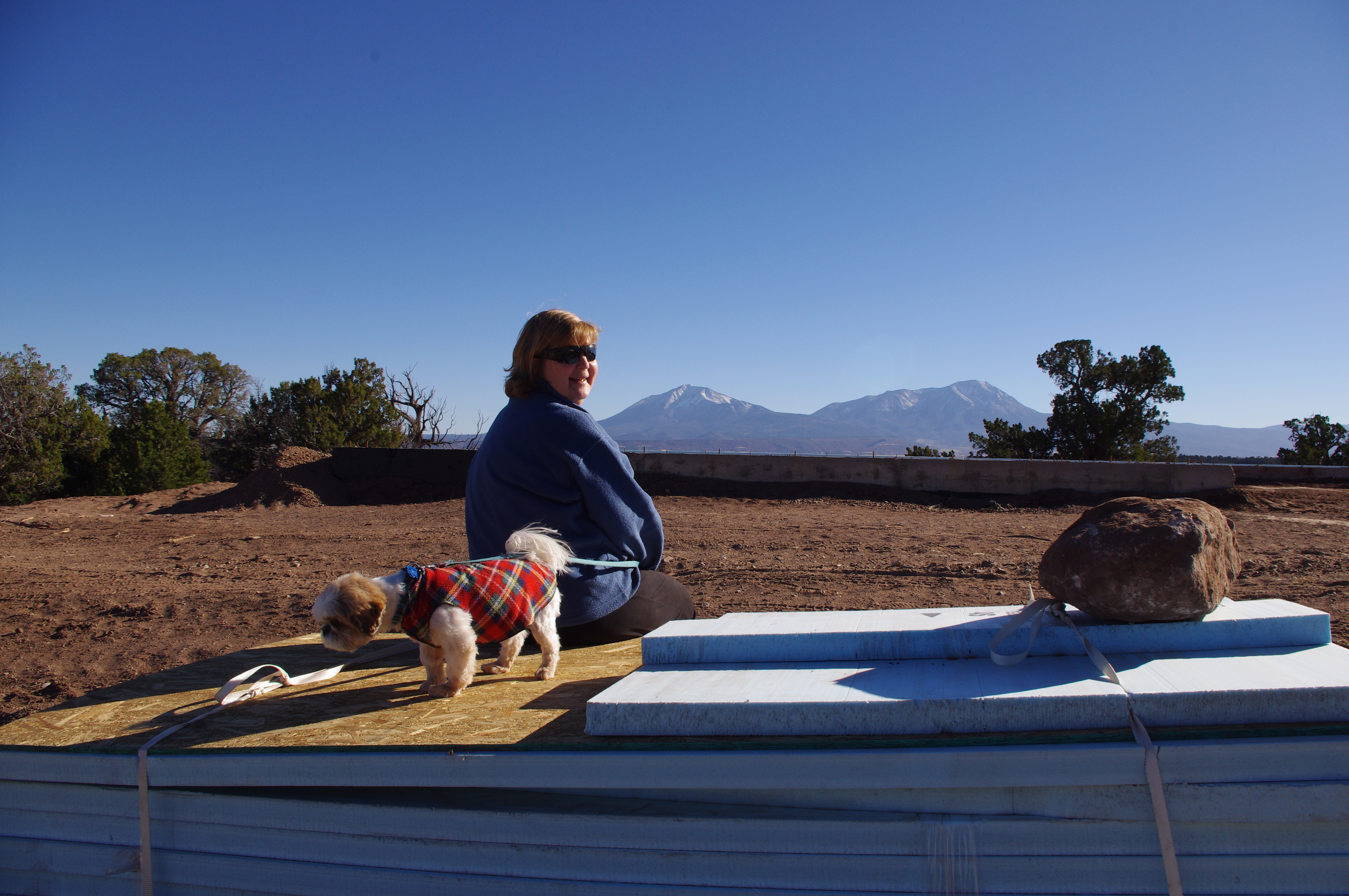
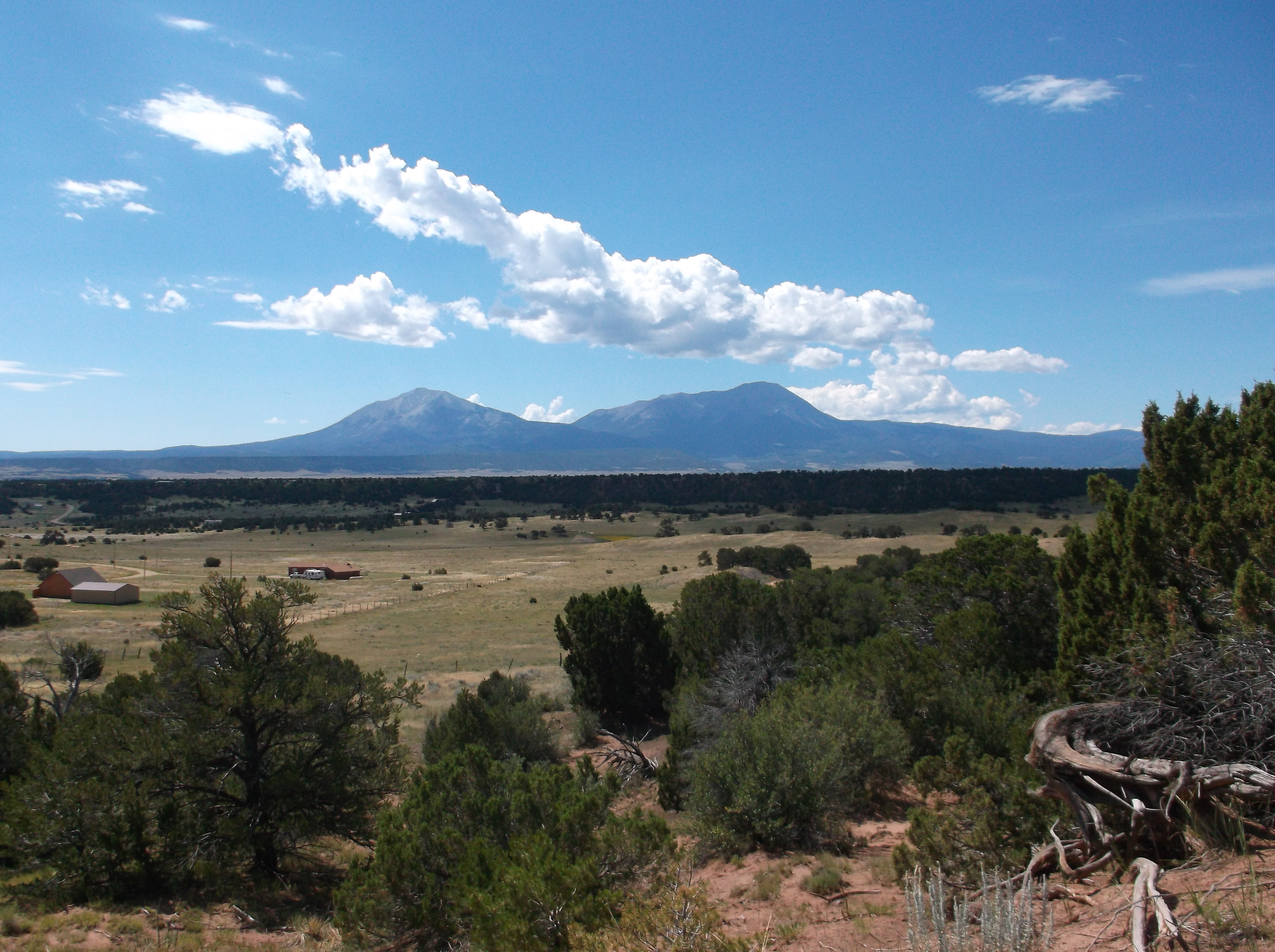
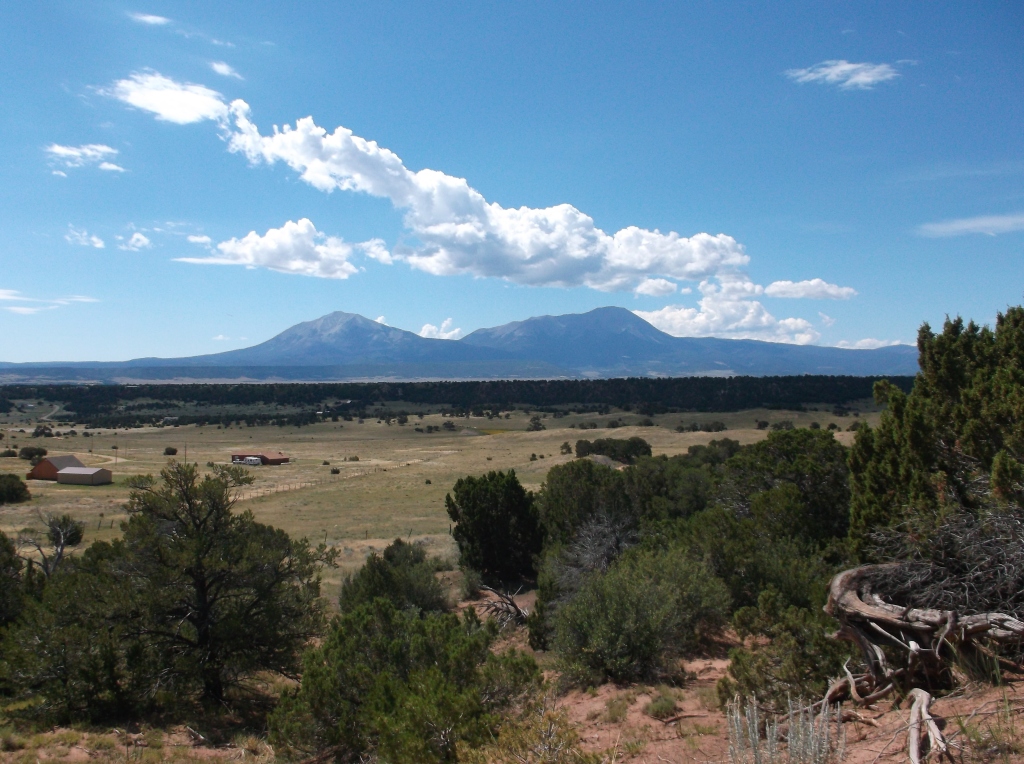 This is the view from our foothills land three hours south of Denver, a fantastic view of Spanish Peaks! A few weeks ago we got the trenching done, and watched them put in the footers… We are ecstatic!
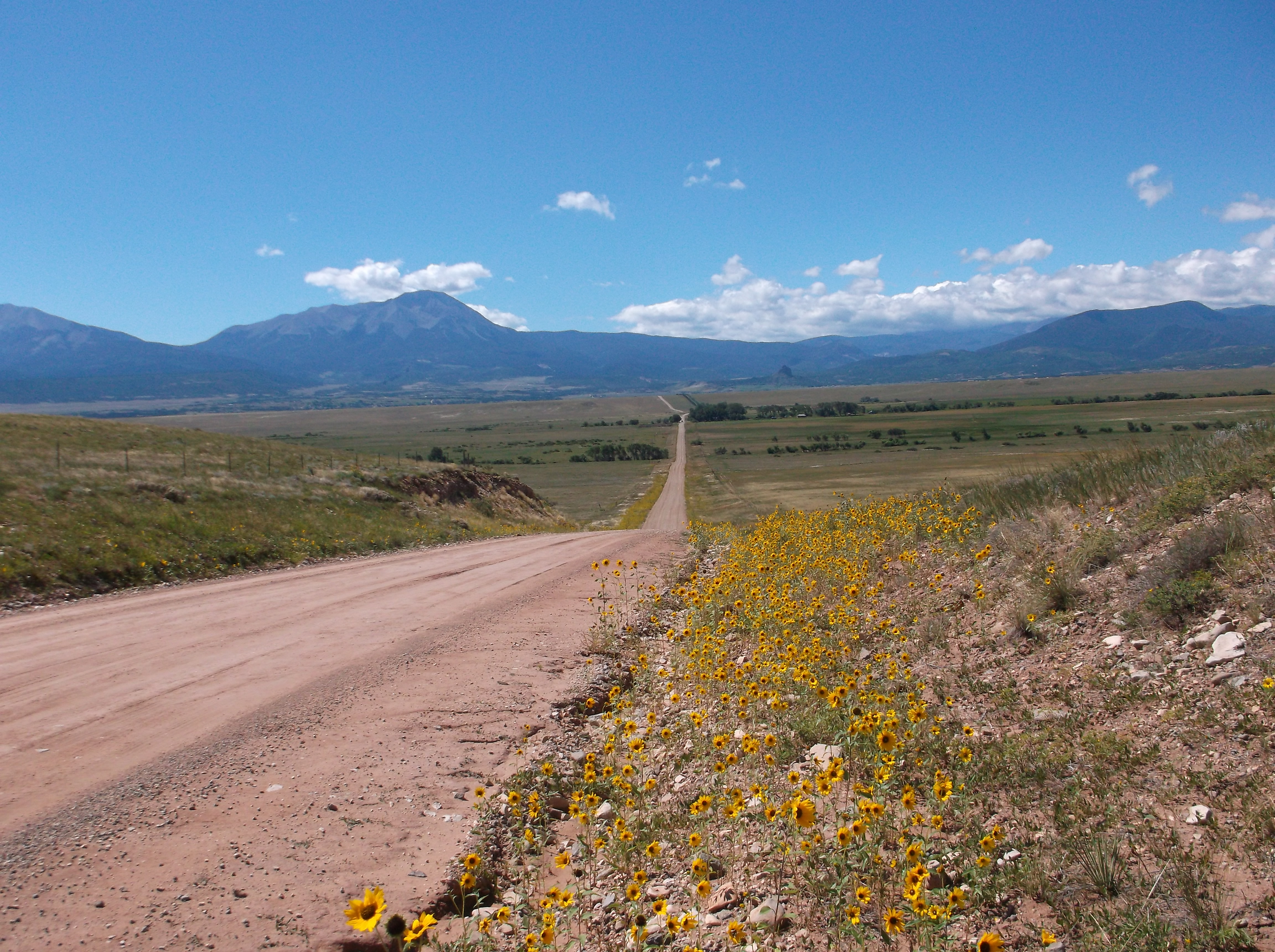
This process has been painfully slow! But we know it will all be worth it in the end. The silence, the views, and the many different birds and wildlife up there, this looks like the perfect place for us… and check out our future commute home!
 Adventures of the NEW??? Old Farts